Welcome to the MTP Lab
We Design High Frequency Chips
Next G Wireless Communication
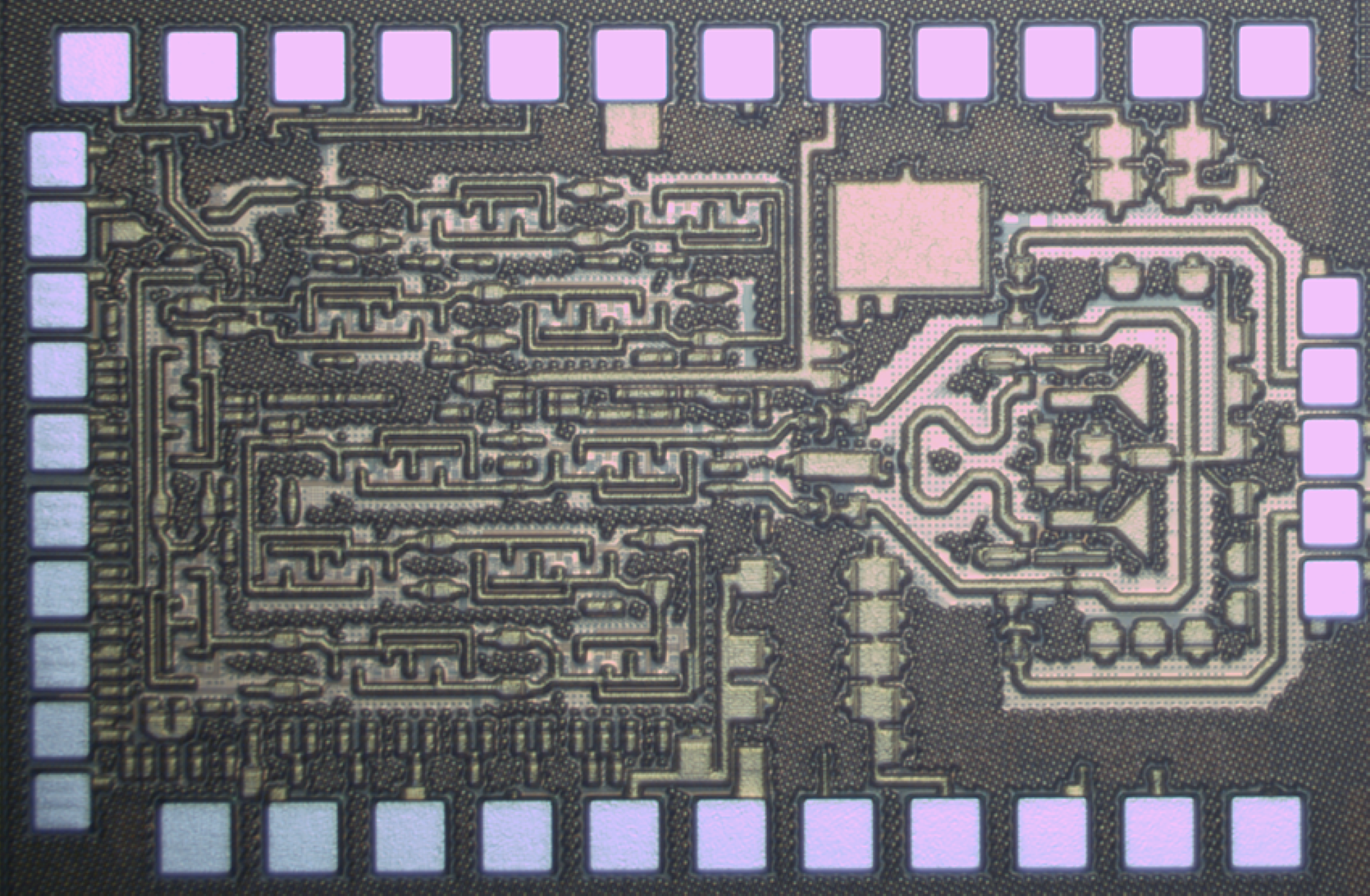
5G and future generations of cellular communications provide unprecedented data rate and new applications with large bandwidth that require linear front-end solutions with minimum latency, noise performance, precise synchronization, and localization that provides significant challenges for transceiver and transceiver front-end design. With the deployment of 5th generation of cellular communication is in progress in US and in the entire globe, we are performing research and chip-scale implementation for 5G, 6G and nextG applications. Higher bandwidth, 1-100 Gbps bit rate, and mm-cm level ranging resolution provides unique challenges to front-end transceiver design that we are trying to solve. Our work starts from theory, design, modeling, and simulation and results in the chip-scale implementation and chips in package solutions with custom chips that we design from a to z in MTP lab. These implementations include full front-end chip-scale transmitter and receiver (Transceivers) from Antenna port to ADC input sometimes including on-chip antennas at higher mmW and THz frequencies. We have access to most advanced circuit and system design CAD tools including Cadence, Virtuoso, ADS, Momentum, SystemVue, Sonnet, HFSS that we use for these types of designs. Thanks to accurate simulation and modeling work that we perform, close agreements between the designs and measurement results are usually observed even at frequencies above 100 GHz. We have designed transceiver arrays, transceivers, and circuit components across the broad range of electromagnetic frequencies from low GHz to mmW and THz frequencies. Examples include transceiver and transceiver components at 1.2 GHz, 28 GHz, 90 GHz, 120 GHz, 230 GHz, 314 GHz, 367 GHz, and 420 GHz. We also have the capability to mount and package the dies in PCB in house. The chips and modules that utilize those chips are characterized using our most modern and sophisticated small signal and large signal characterization tools in MTP lab. The list of the equipment available in MTP lab can be found under the equipment page in the website.
mmW Ranging and Sensing
The ranging precision or the range resolution depends on the bandwidth, and the availability of large bandwidth at millimeter-wave frequencies provide a unique opportunity for high precision ranging. An example of such a system is a 77 GHz automotive radar which is a critical component for today’s cars. The self-driving cars utilize variety of sensing modalities from camera, Lidar, and Sonar to mmW radars. The unique features of the radar allows ranging at low visibility conditions and under the rain, fog and dust where visual detection such as Lidar and optical cameras are incapable of providing useful information. Today’s integrated circuit technologies are the backbone of multiple input multiple output (MIMO) imaging radar systems with low cost, high complexity and high range resolution. RF front-end forms the the most challenging part and the core of these systems. We are actively working on developing integrated phased array systems in CMOS and SiGe BiCMOS technologies at mmW frequencies for ranging and imaging systems. We design and implement the full MIMO transceiver front-end circuits including the frequency synthesis in these technologies at various mmW frequencies. These systems are capable of electronic beam-steering with small beam width. Both FMCW based continuous wave radar phased array transceivers and pulse radars are in our focus. Example of the designed chips can be found under chip gallery in the website. Time transfer and time synchronization with high precision is another active area of research in our team that relies on precision ranging and synchronization.
Distributed Radio Systems
The ranging precision or the range resolution depends on the bandwidth, and the availability of large bandwidth at millimeter-wave frequencies provide a unique opportunity for high precision ranging. An example of such a system is a 77 GHz automotive radar which is a critical component for today’s cars. The self-driving cars utilize variety of sensing modalities from camera, Lidar, and Sonar to mmW radars. The unique features of the radar allows ranging at low visibility conditions and under the rain, fog and dust where visual detection such as Lidar and optical cameras are incapable of providing useful information. Today’s integrated circuit technologies are the backbone of multiple input multiple output (MIMO) imaging radar systems with low cost, high complexity and high range resolution. RF front-end forms the the most challenging part and the core of these systems. We are actively working on developing integrated phased array systems in CMOS and SiGe BiCMOS technologies at mmW frequencies for ranging and imaging systems. We design and implement the full MIMO transceiver front-end circuits including the frequency synthesis in these technologies at various mmW frequencies. These systems are capable of electronic beam-steering with small beam width. Both FMCW based continuous wave radar phased array transceivers and pulse radars are in our focus. Example of the designed chips can be found under chip gallery in the website. Time transfer and time synchronization with high precision is another active area of research in our team that relies on precision ranging and synchronization.

THz Imaging
Modern CMOS and SiGe BiCMOS processes feature maximum frequencies above 500 GHz. This enables the realization of sensitive detectors with high responsivity at THz frequencies. In addition, the reduced wavelength at THz frequencies decreases the antenna size and enables the realization of on-chip antennas in a small real estate. Therefore the realization of THz camera with large number of pixels becomes feasible. While the sensitivity and dynamic range of the system is directly coupled to the device technology, recent advances in circuit design technology has enabled THz cameras with good performance for variety of applications. THz camera is one of the research focuses in MTP lab.


Integrated Electronic Photonic Circuits
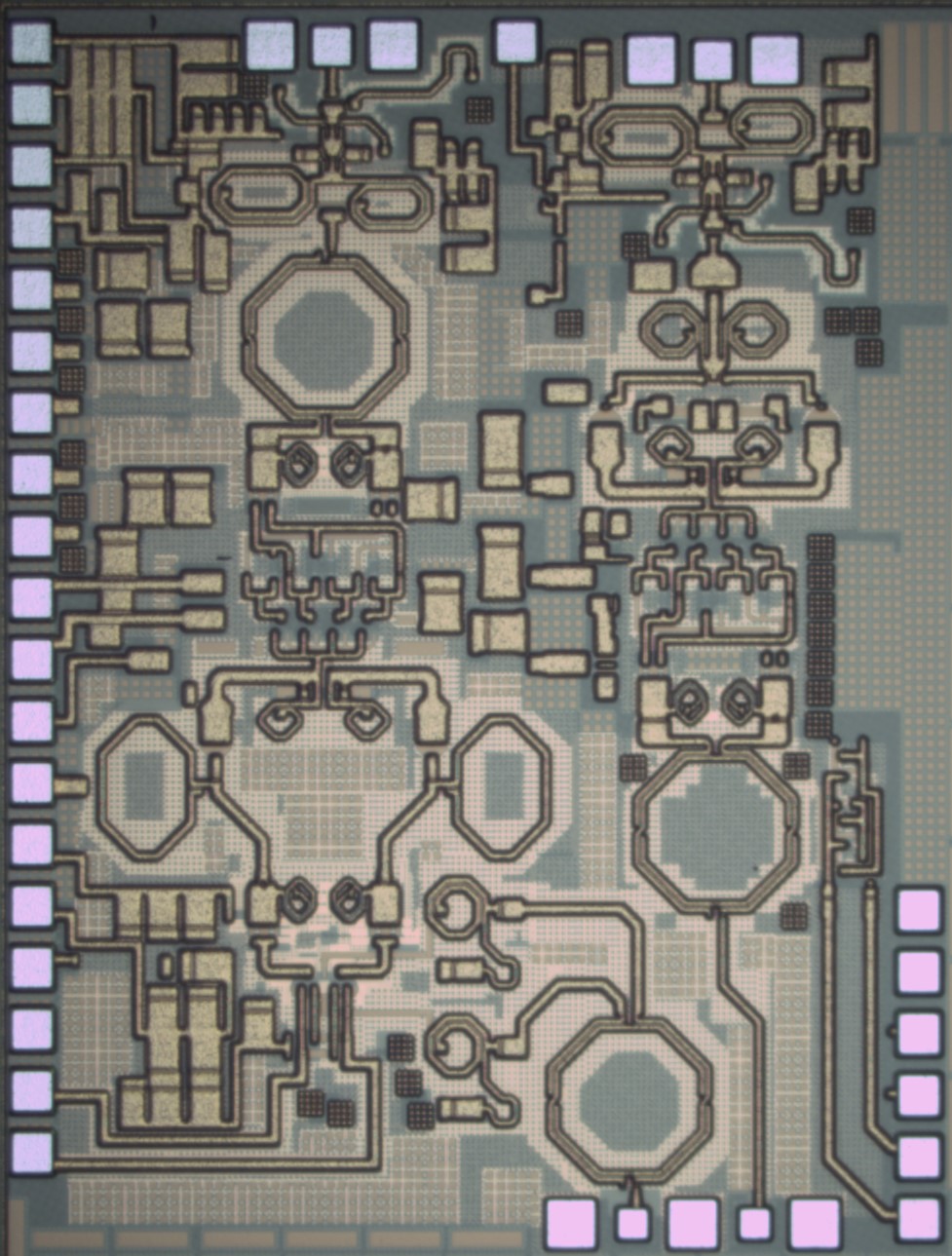
Today’s chip technology has enabled the co-integration of electronic and photonic components on the same silicon substrate. Advanced high-speed CMOS and SiGe HBT transistor and passive components can be integaretd next to silicon optical passive components such as optical waveguides, modulators, resonators, grating couplers, and high-speed Ge photodetectors. These can all be integrated on the same chip with the exception of laser sources. Such a technology plays a key role in breaking the performance trade-off of both electronic and photonic systems in addition to the new applications. For example, electronic assisted photonic systems and electronic assisted photonic systems can provide enhanced performance with high reliability. The full chip integration provides a low cost solution with small size, weight, and power consumption that is beneficial for variety of applications. High bandwidth wireline applications are one of our target applications utilizing the electronic-photonic (EPIC) technology. In addition, the availability of large bandwidth with the small optical antenna sizes have sparkled the development of LiDAR systems with electronic beam steering capability. This is another topic of interest for our research in MTP lab. The chip photo of the example of a electronic-photonic chip for microwave photonic application can be seen in the right photo. This work provides a widely tunable microwave source and amplifier co-designed to provide greater than 10 dBm of output power across a 50 GHz bandwidth. The photo mixing and amplification were co-designed to enhance the bandwidth and the output power while breaking the trade offs and the limitations if designed separately. More information about this work can be found under the publication page in this website. Another chip shows the wideband transimpedance amplifier (TIA) with integrated Ge-photodiode. The availability of the photodiode with 70+ GHz of bandwidth, combined with novel TIA circuit provides a wideband photonic receiver that can avoid the bandwidth limitations and group delay variations across the band as a results of packaging parasitics. Both designs were implemented using SiGe BiCMOS EPIC technology from ihp.

